Understanding Climate Change: Facts vs. Fiction
Climate change affects everyone. Let's break down the science, and understand what's really happening to our planet.

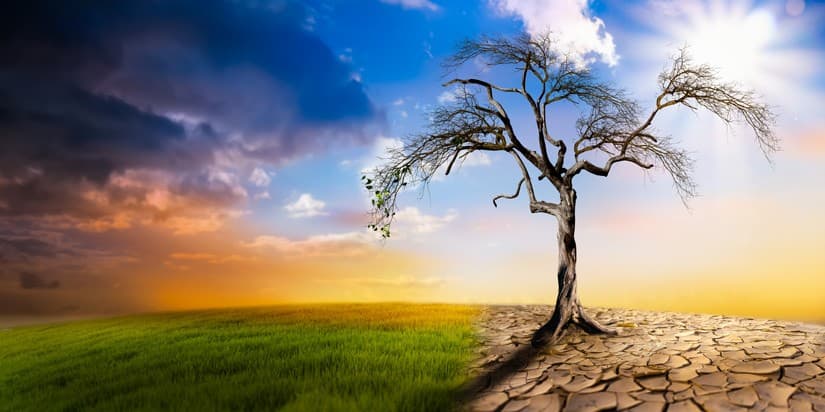
The Scientific Consensus
Climate change refers to long-term shifts in temperatures and weather patterns. While the Earth's climate has always changed naturally, scientists agree with over 97% certainty that the current, rapid warming trend since the mid-20th century is extremely likely due to human activity—primarily the burning of fossil fuels (coal, oil, and gas). These activities release greenhouse gases that trap heat in the atmosphere.
Fact vs. Fiction: Debunking Common Myths
In the age of social media, it's easy to get confused by conflicting claims. Here are the facts on a few common myths:
Fiction: "It's just the sun getting hotter."
Fact: While the sun does influence climate, data shows that solar energy has slightly decreased since the 1970s. If the sun were the cause, the entire atmosphere would be warming. Instead, only the lower atmosphere (where we live) is warming, while the upper atmosphere is cooling, which is a signature of heat being trapped by greenhouse gases below.
Fiction: "A few degrees of warming isn't a big deal."
Fact: Even a small increase in the global average temperature leads to extreme weather events. It's like having a slight fever; a few degrees off the average healthy temperature can make the whole system sick. This leads to more intense heat waves, droughts, floods, and stronger hurricanes.
Fiction: "We can't do anything about it now."
Fact: While the challenge is huge, every action matters. Transitioning to renewable energy (solar, wind), improving energy efficiency, and changing our consumption habits can collectively slow the rate of warming and limit the most severe impacts. Technology and innovation offer solutions.
What Does This Mean for the Future?
Understanding the science helps us prepare for the changes ahead:
- Rising Sea Levels: As global temperatures rise, glaciers and ice sheets melt, and the ocean water expands. This threatens coastal communities and low-lying areas.
- Impact on Food and Water: Changes in rainfall and temperature patterns affect agriculture, leading to potential food shortages in some regions and putting stress on freshwater resources.
- Biodiversity Loss: Many species of plants and animals cannot adapt quickly enough to the rapidly changing climates, leading to extinction risks.
!(https://via.placeholder.com/600x400.png/e8f5e9/333333?text=Protect+Our+Planet)

Your Role as a Student
You are the generation that will drive the solutions. You can help by:
- Educating Yourself: Stay informed by consulting reliable scientific sources (NASA, NOAA, academic journals).
- Advocating for Change: Use your voice to encourage your school, community, and local leaders to adopt sustainable policies.
- Making Sustainable Choices: Reduce waste, conserve energy at home, choose reusable products, and support businesses committed to environmental responsibility.
Final Word
Climate change is one of the defining challenges of our time, but understanding the facts empowers you. Knowledge is the first step toward action, and collective action is what will secure a sustainable future.